
EXECUTIVE BRIEF
The most effective propaganda operation in America right now belongs to one man in Huntsville, Alabama. In 2024 he noticed a black pole on his commute, a camera with a solar panel on top, looked it up, and built a map. His name is Will Freeman. The map is called DeFlock, and it became the nervous system of a movement now dismantling Flock Safety, the largest automated license plate reader network in the country.
The campaign runs on a single narrative: a warrantless surveillance state is being assembled around you, one pole at a time. That one frame resonates simultaneously with immigrant rights progressives, post-Dobbs reproductive rights advocates, and constitutional conservatives. Immigration raids and abortion tracking gave the abstract fear a face. The surveillance state frame gave the left and the right a shared enemy.
The outcome has been extraordinary for a grassroots effort. DeFlock scaled from roughly 5,600 mapped cameras in mid-2024 to tens of thousands within two years. More than 80 Flock contracts have been terminated across 28 states, with over 50 cities canceling and a single wave of 53 in June 2026. This Blacklist file documents how a distributed movement with no budget used propaganda to out-frame a venture-backed company with a 100,000-camera footprint.
The Propaganda Blacklist is the Bureau of Propaganda Intelligence’s ongoing archive of history’s most consequential propaganda campaigns and operators, each dissected down to the mechanics that made it work. Click here to understand the true power of corporate propaganda.
THE PROBLEM
The resistance faced an opponent with every structural advantage: capital, contracts with police, a public safety halo, and physical presence in thousands of jurisdictions. Traditional advocacy, the op-eds and privacy white papers and single-city ordinance fights, had always lost to a three word rebuttal: it catches criminals. Surveillance spreads slowly and invisibly, one council vote at a time, with no single moment to rally against. Left alone, warrantless vehicle tracking would harden into permanent civic infrastructure.
THE OBJECTIVE
Make the invisible visible and the abstract personal. Convert innocuous “license plate readers” from unnoticed street furniture into a felt threat to every citizen’s freedom, then translate that feeling into municipal action: cancellations, moratoriums, deactivations. Success was measured in poles removed and contracts killed.

NARRATIVE ARCHITECTURE
Narrative Thesis: A private company is quietly assembling a nationwide, warrantless surveillance dragnet that logs and shares the movements of ordinary people, and that data will be turned against the most vulnerable first and everyone else eventually.
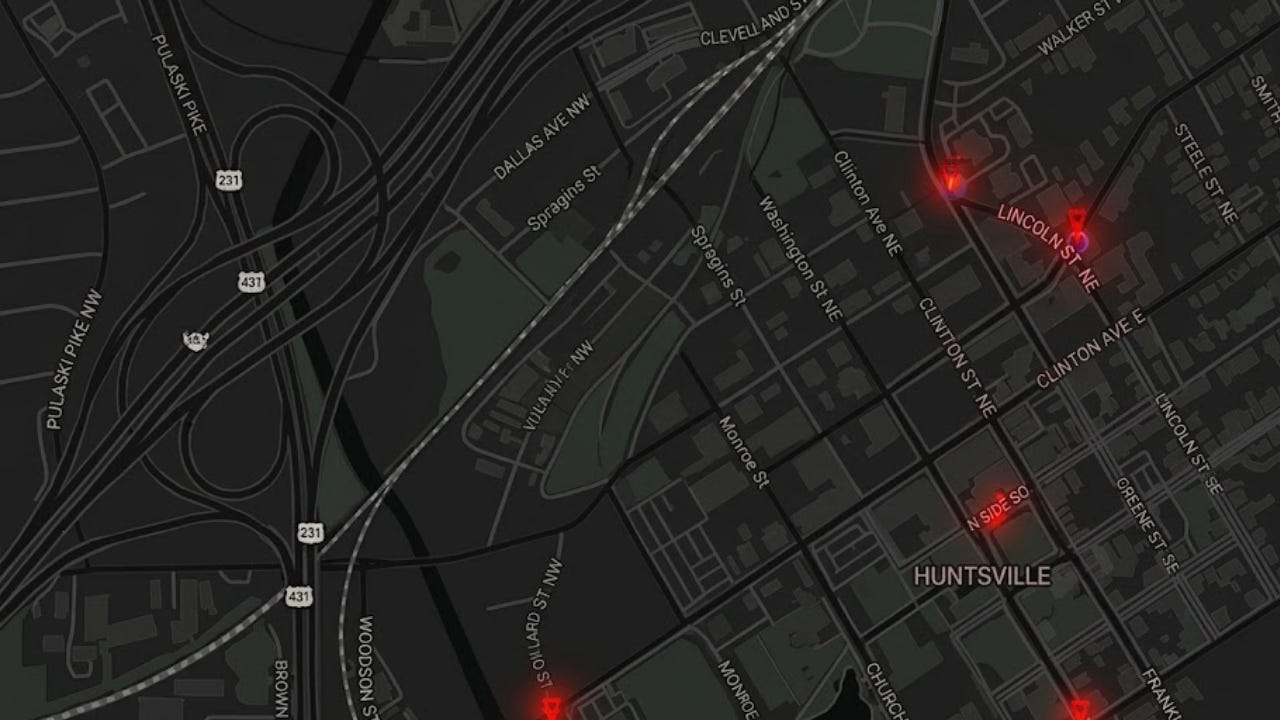
Narrative Anchor: The DeFlock map. A live, crowdsourced visualization that renders the invisible network suddenly, undeniably visible. The map is the argument. The secondary anchor is the verb itself: to deflock is to liberate.
Key Messages:
Warrantless mass surveillance of everyone on the road.
Your local data feeds a federal deportation system.
They tracked a woman across state lines for seeking an abortion.
Flock lies to city councils, and its cameras are not even secure.
Emotional Levers:
Fear of being tracked, loss of freedom, the vulnerable being hunted.
Unity of belonging to a rare left-right coalition fighting the same enemy.
Righteous defiance, the folk-hero charge of the people cutting the poles down.
EVIDENCE & ARTIFACTS
01 The Map. DeFlock, first reported by 404 Media. It turns an abstract fear into a personal, geolocated one the instant a resident spots a pole near home.
02 The Toolkit. The ACLU's Get the Flock Out playbook converts diffuse outrage into repeatable municipal action: coalition letters, model ordinances, and the tactic of intervening at contract renewal and grant funding. El Cerrito declined to renew and saved roughly $315K. Mountain View discontinued on the spot.
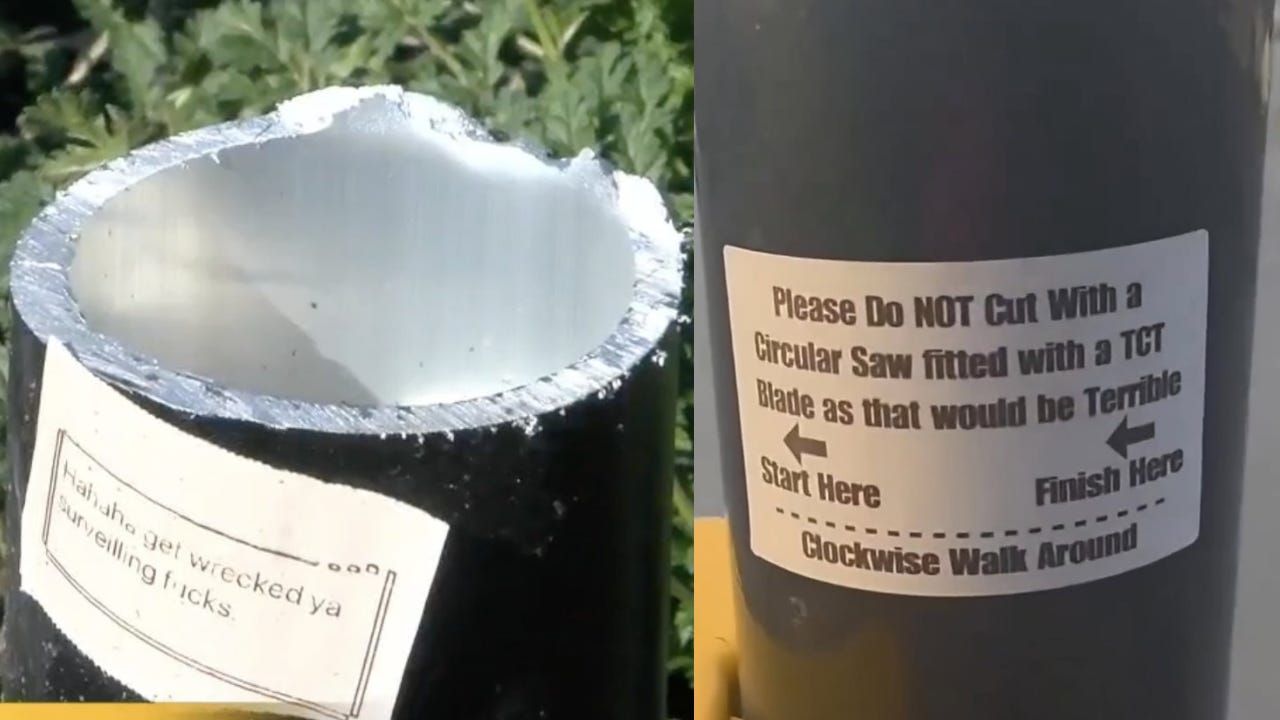
03 The Radical Flank. A severed camera pole in Oregon carried a note: "Hahaha get wrecked ya surveilling." The destruction became shareable content, amplifying reach while handing the movement its central liability.
IMPACT ASSESSMENT
More than 80 contracts terminated across 28 states. Over 50 cities canceling, deactivating, or rejecting. A 53-city wave in a single month. The EFF and ACLU of Northern California sued San Jose over warrantless ALPR searches. Flock paused its federal pilots, added keyword filters, and launched a transparency portal, every one of them a defensive move forced by the campaign. When Flock sent DeFlock a cease and desist, the mapmaker refused it with legal backing and wore it as a First Amendment badge. Every act of corporate force became fuel for the resistance campaign.
The decisive turn was the fusion with independent security research. Reporters found Flock cameras open on the public internet with no password, one of them aimed at a children's playground. That welded two narratives together, tyrannical and incompetent, a pairing an ideological campaign could never manufacture on its own.
While there’s no signs that radicalization was the original intention of this campaign, people have been galvanized to the point of committing the federal (and state) crime of destroying Flock cameras around the country.
MODERN RELEVANCE
This is the template for 21st-century asymmetric advocacy. A single mapped dataset, an open-source verb, and a plug-and-play municipal toolkit can dismantle a venture-scale operation faster than any legislature. Expect the DeFlock model, map the infrastructure, personalize the threat, arm the locals, to be copied against every surveillance and data vendor in the country.
If you’d like to build a campaign like this for your start up or organization, request a propaganda audit here.
ANALYST NOTES
Call it a privacy movement and you’ve named the cover story while missing the true mechanism. A decentralized coalition solved the hardest problem in persuasion, getting people to care about something slow, abstract, and invisible. And it solved that problem with a map that shows you exactly where your shared enemy is at any given moment. The moment you see a red dot two blocks from your house, the abstraction collapses into your driveway. Freeman never had to out-argue Flock. He out-rendered them.
The coalition is the underestimated part. Putting an immigrant rights progressive and a Ruby Ridge constitutionalist behind the same slogan is close to impossible, unless the enemy is abstract, yet visceral, enough to hold both of their worst nightmares at once. Mass surveillance is a Rorschach blot. The left sees ICE, the right sees the ATF, and both are staring at the same pole. The lesson for any business: a shared enemy vague enough to hold two projections is more durable than a specific one that only holds one.
None of this makes the campaign clean, and honest analysis says so. It celebrated felony property destruction as folk heroism and let that flank ride shotgun on its reach. It counts removed cameras as victories, some of which were closing real kidnapping and hit-and-run cases. And it built a global map of surveillance infrastructure that doubles as a targeting list, the same dual-use irony that lets police use Flock to catch the people smashing Flock. A movement this effective is difficult to classify, but time will tell us it’s true merits (or lack thereof).
MNE Classifications
Type: Campaign
Operator: Multiple Operators — Will Freeman (DeFlock, originator/anchor)
Years Active: 2024–Present
Status: Active
Scale: National
Category: Social
Industry: Advocacy / Political
Narrative Strategy: Existential Threat & Problem Agitation
Ethical Assessment: Indeterminate
Holy shit! I thought Australia was bag cameras everywhere but this is insane! Such a great example of what can be achieved. Even fighting against big money and power.